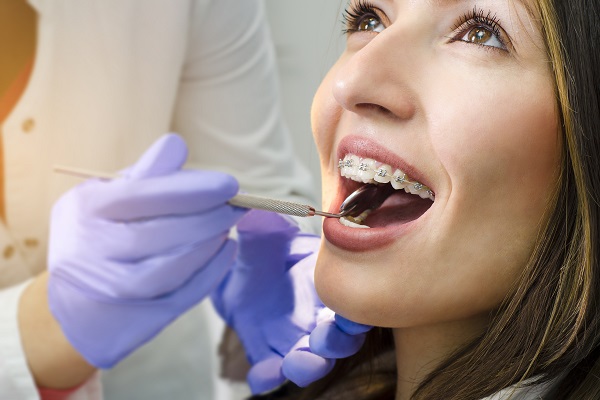
Braces have been used for orthodontics for over a century. They move teeth by applying force on them, slowly pushing them to a better alignment. Braces are made up of brackets that are attached to each tooth and wires that connect all the brackets on a dental arch. Increasing tension in these wires increases the force being applied to the patient’s teeth. Pushing teeth to a better alignment is the idea that powers orthodontics.
About braces
Braces are highly recommended by dentists when it comes to fixing severe bite issues. Treatment times are typically somewhere between one to three years. Braces are easily noticed when worn, however, and that makes some people reluctant to straighten their teeth with them.
Fortunately, more aesthetically pleasing options like ceramic braces have been developed. Ceramic braces have similar parts as metal braces, but the metallic components are replaced with transparent and tooth-colored parts. As a result, it is harder to notice them on teeth.
Pros and cons of orthodontics with braces
Most people think of braces when orthodontics is mentioned. The benefits of straightening teeth with braces include:
- Traditional braces can be used to treat a wider range of orthodontic issues than clear aligners, such as problems caused by a person’s jaw being improperly positioned
- Braces tend to lead to better outcomes compared to clear aligners
- Braces are typically more affordable than clear aligners
- Braces work 24/7, and that can lead to shorter treatment times
- Braces being non-removable can be a plus for the parents of children who need orthodontic treatment
- There is no way that a person can lose their braces
- Braces are more effective at straightening children’s teeth
- Ceramic braces provide decent aesthetics
- Braces are sturdier than clear aligners
However, there are downsides to fixing bite issues with braces. The most common ones include:
- Metal braces can ruin a person's smile
- People who wear braces often must avoid foods that need to be bitten into, like apples or corn, since this can lead to food particles getting stuck underneath the appliance or cause damage
- Braces being non-removable makes it harder to clean teeth and eat during treatment
- Treatment with braces typically requires monthly visits to a dentist
- Braces are more challenging to clean than clear aligners
Braces can get you a straight smile
Braces might not be the most aesthetically pleasing oral appliances used to straighten teeth, but they get the job done. Call or visit our Portland clinic to learn more about how oral appliances like braces can be used to fix problems with your bite.
Request an appointment here: https://www.cosmeticdentistoffice.com or call Rachel Cole DDS PC at (503) 248-1114 for an appointment in our Portland office.
Check out what others are saying about our dental services on Yelp: Orthodontics in Portland, OR.
Recent Posts
Are you looking into your teeth straightening options? Orthodontics is a popular part of the dental arena, as straight teeth are desirable. Not only because straight teeth make for a pleasant-looking smile, but it is also important for teeth to be in their correct positions in order to support good oral health. Choosing a general…
A dentist may recommend a dental deep cleaning when gum health needs more support than a standard cleaning can provide. This treatment, also known as scaling and root planing, removes plaque and tartar from below the gumline. Its goal is to control bacteria, support healing, and protect the bone and tissue that hold teeth. Here…
Dental implants provide a reliable, long-term solution for replacing missing teeth, but not every patient qualifies for treatment immediately. Several oral health and medical factors can affect whether implant placement is appropriate at the time of evaluation. The goal of a general dentist is to identify these concerns and develop a treatment plan that improves…
A deep dental cleaning helps protect the smile when gum disease develops. Problems with the gums often start quietly, bringing symptoms that can be easy to ignore: mild bleeding, inflammation, and tenderness. A dentist may recommend these deeper cleanings to remove bacterial buildup beneath the gumline, help the gums heal, and reduce the risk of…